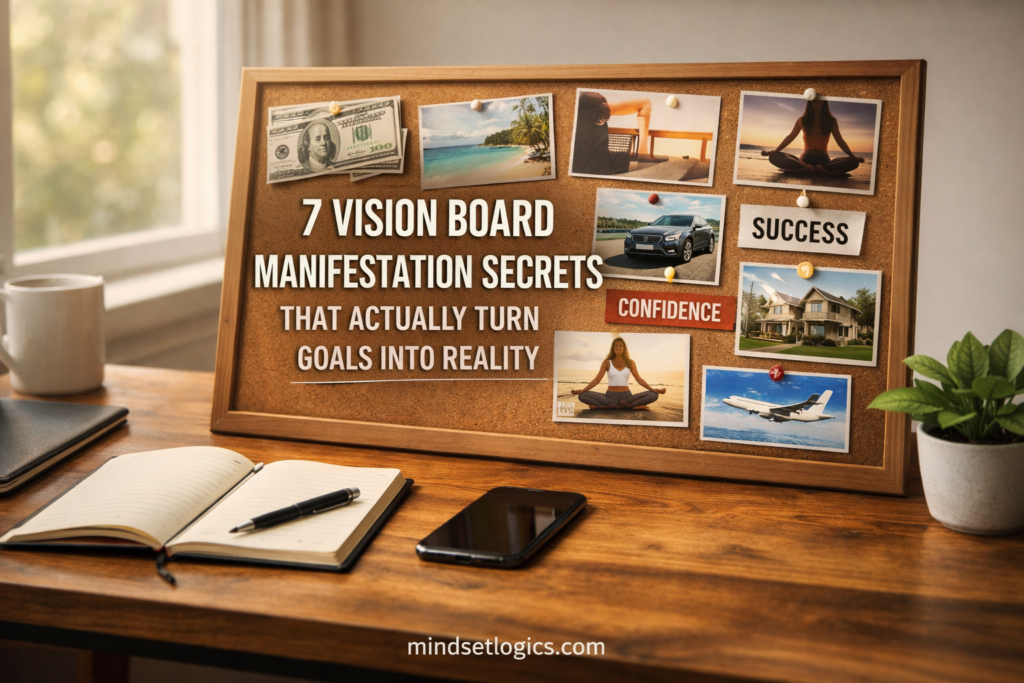

Let’s be honest for a second. Almost everyone has made a vision board at least once, felt super inspired for two days, and then quietly forgot about it. Sound familiar? I’ve been there too. I used to think vision boards worked only for “lucky” people or those Pinterest-perfect creators. Turns out, the problem wasn’t the vision board. The problem was how I used it.
Vision board manifestation works, but only when you stop treating it like wall decor and start treating it like a mindset tool. I learned this the hard way, through trial, error, and a few eye-roll moments at my own habits. In this article, I’ll share the exact vision board manifestation secrets that finally helped me turn goals into real-life results. No fluff. No fake hype. Just what actually works.
Ready to fix your vision board game?
1. Get Specific or Stay Stuck
Getting specific is the difference between daydreaming and actually manifesting results. When you keep goals vague, your brain doesn’t know what to focus on, so it does… nothing useful. Saying “I want more money” sounds nice, but it gives your mind zero direction. More compared to what? When? From where? That confusion keeps you stuck.
When I switched from broad ideas like “success” to clear outcomes, everything felt sharper. My thoughts aligned faster, my actions improved, and opportunities became easier to spot. Specific goals act like a GPS for your brain. They tell it exactly what to notice, what to prioritize, and what decisions support the goal.
Clear goals also build belief. “$5,000 saved by September” feels real and trackable. You can imagine it, plan for it, and recognize it when it happens. So always ask yourself: Would I instantly know if this manifested today? If the answer feels fuzzy, your goal needs tightening.
2. Choose Images That Trigger Emotion, Not Aesthetics
Choosing images for your vision board isn’t about making it look pretty—it’s about making it feel real. Aesthetic boards might look nice on Instagram, but they don’t trigger change on the inside. And manifestation always starts internally. Your emotions act like the fuel. Without them, the vision board stays decoration.
I learned this the hard way. I once filled my board with neutral tones, fancy fonts, and trendy photos. It looked great, but it didn’t move me at all. When I switched to images that sparked relief, excitement, or quiet confidence, things shifted fast. My brain paid attention.
The right image should:
- Make you pause, even for a second
- Trigger a physical response like a smile or deep breath
- Feel personal to you, not copied from trends
IMO, one image that makes you feel “this is mine” works better than ten generic luxury photos 🙂
3. Place Your Vision Board Where You’ll Actually See It
Placing your vision board where you actually see it matters more than most people realize. When something stays out of sight, your mind stops engaging with it. I learned this the hard way when I kept my vision board tucked inside a notebook I rarely opened. Unsurprisingly, nothing changed. The moment I placed it where my eyes landed every day, my focus shifted naturally.
Daily visibility creates subconscious repetition. You don’t need long visualization sessions or forced focus. Just seeing your goals again and again reminds your brain what matters. That quiet repetition shapes your thoughts, decisions, and reactions over time.
The best spots are simple and practical: a bedroom wall, a closet door, your phone wallpaper, or your desk background. These places work because you already look at them without effort. Ever noticed how ads influence you even when you ignore them? Your vision board works the same way—consistent exposure does the heavy lifting without draining your energy.
4. Stop Obsessing Over “How” It Will Happen
Obsessing over how something will happen is one of the fastest ways to block vision board manifestation. I learned this the hard way. When you try to control every step, you shift from trust into tension. And tension kills flow, every time.
Vision boards work best when you lock your focus on the end result, not the route. Your job isn’t to figure out every detail. Your job is to stay aligned with the outcome. When I stopped micromanaging and relaxed into the belief that “this will happen,” new ideas, people, and chances showed up naturally. Some of them came from directions I never would have planned.
Here’s the balance that actually works:
- Focus on what you want, not how it must arrive
- Take inspired action when it feels right
- Release strict timelines that create pressure
FYI, letting go doesn’t mean sitting idle. It means acting calmly, without panic, and trusting the process to meet you halfway.
5. Pair Your Vision Board With Daily Micro-Actions
Vision board manifestation works best when you add movement to intention. A vision board shows you where you want to go, but daily micro-actions decide how fast you get there. Manifestation loves action because action tells your brain, “I’m serious about this.”
I noticed my results improved the moment I stopped waiting for motivation and started taking small, repeatable steps. Not big, scary moves. Just simple actions I could actually stick to. One job application a day. Saving a fixed amount every week. Practicing a skill for 20 minutes without excuses.
These micro-actions do two powerful things. First, they build momentum. Second, they strengthen belief. When you act daily, your mind starts trusting the vision on your board. And once belief grows, opportunities feel easier to spot.
Ever noticed how motivation shows up after you act, not before? That’s why vision plus action becomes unstoppable.
6. Talk to Your Vision Board (Yes, Seriously)
Talking to your vision board sounds awkward at first, but it works because words shape belief. When you speak your goals out loud, you stop treating them like wishes and start treating them like facts in progress. I don’t do long chanting sessions or dramatic rituals. I simply spend 30–60 seconds a day describing my goals as if they already exist.
When I say things like “I love how calm I feel with money” or “I trust myself to handle success,” my brain starts accepting these ideas as normal. That matters because your inner voice runs your decisions all day long. If that voice supports your goals, your actions naturally align.
This practice feels strange initially because your old self resists change. That’s normal. Keep going anyway. Over time, your inner dialogue shifts from doubt to familiarity, and familiarity creates confidence. And confidence? That’s where manifestation speeds up.
7. Update Your Vision Board as You Evolve
Updating your vision board matters more than most people realize. When your goals change but your vision board stays stuck in the past, your mind feels conflicted. Old goals lose their energy because they no longer match who you are becoming. Manifestation works best when your intentions align with your current identity, not an outdated version of yourself.
I learned this after keeping goals on my board that no longer excited me. I felt guilty removing them, so I ignored the discomfort. That guilt quietly blocked progress. Once I replaced those images with goals that felt right now, my motivation and focus returned.
You should update your vision board when a goal manifests, when a desire feels forced instead of exciting, or when your priorities naturally shift. Growth changes your direction, and that’s a good thing. Treat your vision board like a living document, not a lifelong contract. You evolve, your mindset evolves, and your goals should evolve with you.
Conclusion
Vision board manifestation doesn’t fail. People quit too early or use it wrong. When you combine clarity, emotion, visibility, trust, action, and consistency, your vision board turns into a powerful mindset tool instead of wall art.
Here’s the simple truth: your vision board works when it reflects who you believe you are becoming. Treat it like a daily reminder, not a one-time craft project. Adjust it as you grow. Use it with intention. And most importantly, stay patient while staying active.
So ask yourself this: Does my current vision board represent my future self—or my past comfort zone? Update it accordingly, and let the process surprise you.