
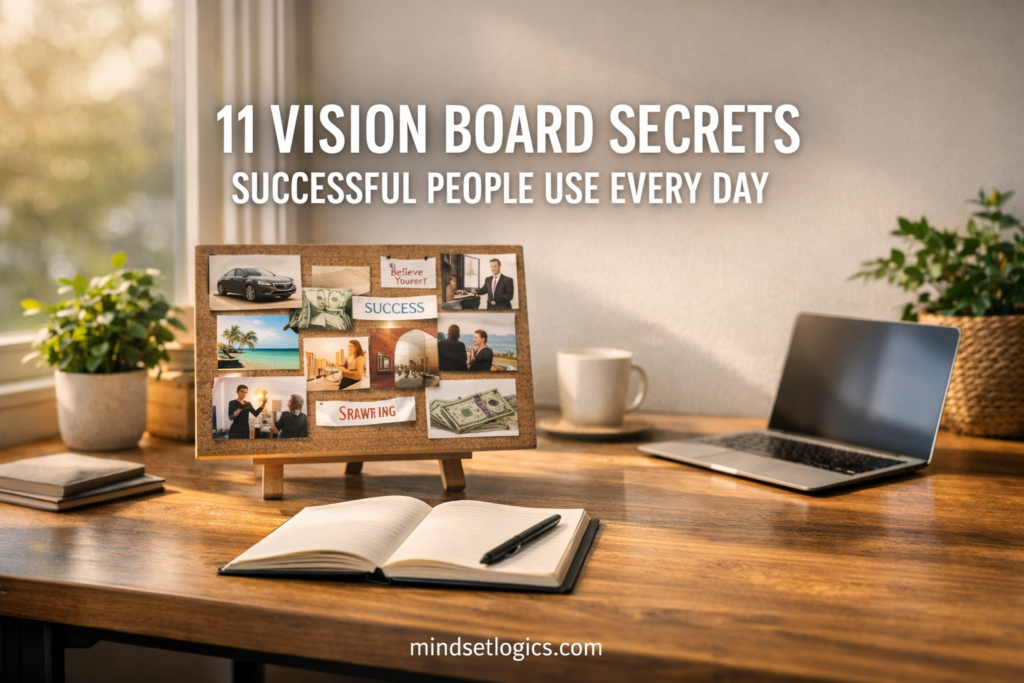

Let’s be honest for a second. Most people create a vision board, feel excited for two days, then forget it exists. I did the same thing. I cut out pictures, stuck them on a board, admired my “future life,” and waited… nothing happened. Sound familiar?
That’s when I realized something important: successful people don’t just make vision boards, they use them daily. A vision board works only when it becomes part of your routine, not a one-time arts-and-crafts project.
If you’ve ever wondered why vision boards work amazingly for some people and do absolutely nothing for others, this article answers that. I’ll walk you through 11 vision board secrets successful people use every day, based on real habits, not Pinterest fantasy boards. Ready to fix your approach? Let’s do this.
1. They Get Extremely Clear Before Creating the Vision Board
Successful people don’t treat a vision board like a collage project. They treat it like a direction-setting tool. That’s why clarity comes first, always. Random images create random results. Clear intentions create recognizable outcomes.
When I added vague ideas like “money” or “success,” my mind didn’t know what to work toward. More money how much? Success in which area? The moment I defined exact goals—like saving $10,000, landing a specific job role, or earning a monthly income target—my focus sharpened. My actions improved automatically. Ever noticed how clarity removes mental friction?
A strong vision board includes:
-
Specific goals your brain can measure
-
Clear timelines that feel realistic, not desperate
-
Emotional reasons that make the goal meaningful
Here’s a simple test: If this goal appeared tomorrow, would you instantly recognize it? If the answer feels fuzzy, your vision needs tightening. Clarity doesn’t limit results. It accelerates them.
Most vision boards fail for one simple reason. 7 Vision Board Manifestation Secrets That Actually Turn Goals Into Reality
2. They Focus on Fewer Goals (Not 50 at Once)
Successful people understand one simple truth: your mind works best with focus, not overload. When you put 30–50 goals on a vision board, your brain doesn’t feel motivated—it feels confused. Instead of clarity, you create mental noise. Ever looked at a crowded board and felt tired instead of inspired? Exactly.
When you limit your vision board to 5–10 meaningful goals, your attention sharpens. Your mind knows what matters now. I saw this firsthand when I stopped chasing everything at once—dream house, perfect body, soulmate, crazy money—and focused on just a few priorities. Progress sped up almost immediately.
A focused vision board:
- Feels calm and intentional
- Helps your brain lock onto clear outcomes
- Makes daily visualization quick and effortless
Your energy stops scattering in every direction. Less chaos gives your goals room to grow. Focus doesn’t limit results—it multiplies them.
3. They Use Real Images That Feel Believable
This secret matters because your brain responds to believability, not fantasy. When you use over-the-top images—private jets, mansions, or unrealistic lifestyles—your mind often reacts with quiet resistance. Instead of feeling inspired, it thinks, “That’s not for me,” and shuts down the emotional connection. That resistance blocks motivation and consistency.
Successful people choose real images that feel like a natural next step, not a massive leap. When I swapped a private island photo for a realistic income goal, my energy changed instantly. The goal felt reachable, so my actions followed. I stayed more focused, confident, and consistent without forcing belief.
The right images should feel emotionally safe and mentally acceptable. They should stretch you, but not scare your nervous system. When your brain sees an image and thinks, “Yes, this could happen,” alignment starts naturally. Believability creates momentum, and momentum produces results faster than any unrealistic fantasy ever could.
4. They Place the Vision Board Where They See It Daily
Placing your vision board where you see it daily sounds simple, but it’s a game changer. A vision board hidden in a drawer has zero power because it never talks to your mind. Successful people understand that daily visual reminders shape daily thinking. When you see your goals again and again, your brain treats them as important, not optional.
I keep my vision board near my workspace, and honestly, those quick glances matter more than long, dramatic visualization sessions. You don’t need candles, music, or 30 minutes of focus. You need consistent exposure. Every time your eyes land on the board, your mind quietly adjusts your thoughts, decisions, and actions in that direction. Ever noticed how you start noticing opportunities related to your goals? That’s not magic, that’s awareness.
The best spots include your bedroom wall, workspace, phone wallpaper, or even your closet door. Out of sight really does mean out of mind, and successful people never let their goals disappear from view.
5. They Look at It Daily (But Don’t Obsess)
Successful people treat their vision board like a daily reminder, not a control panel. They look at it every day to stay aligned, but they don’t obsess over it or demand instant results. Obsession creates tension, and tension sends the message that you don’t trust the process. Ever noticed how things feel harder when you keep checking “is it here yet?” That pressure blocks momentum.
I keep it simple. I glance at my vision board for 30–60 seconds, take one deep breath, and let myself feel calm confidence. Not wild excitement. Not desperation. Just a quiet sense of “this is unfolding.” Then I move on with my day.
This daily habit works because it keeps your goal active in your mind without triggering anxiety. You stay focused, relaxed, and open. That relaxed alignment matters more than long visualization sessions. Less forcing, more allowing—that’s where flow starts.
6. They Attach Emotions, Not Just Images
Attaching emotions to your vision board matters more than choosing perfect images. Images give your mind a direction, but emotions give it fuel. Successful people don’t just look at a picture of money, success, or freedom—they feel what having it would change in their life.
When I imagine financial freedom, I don’t jump into crazy excitement. I focus on relief. Relief feels calm, believable, and natural. That’s important because your mind accepts emotions that feel safe and realistic much faster than over-the-top hype.
Ask yourself simple questions while looking at your vision board:
- How would my life feel once this goal is real?
- Would I feel peaceful?
- More secure?
- Quietly confident?
When you feel those emotions first, your actions start matching that state automatically. You make better decisions, take aligned steps, and stop chasing from a place of lack. Feel first, then act—results tend to follow without force.
7. They Combine the Vision Board With Daily Action
This is where most people get manifestation wrong. A vision board doesn’t replace action—it guides it. Successful people never treat their vision board like a magic wish list. They treat it like a GPS. It shows the destination, but they still have to drive.
Instead of waiting on the couch and hoping the universe does everything, they ask smart daily questions. What’s one small action I can take today that matches this vision? Sometimes it’s learning a skill, sometimes it’s sending one email, sometimes it’s just showing up more confidently. Small moves add up fast.
They also focus on identity, not just outcomes. They ask, Who do I need to become to deserve this goal? More disciplined? More confident? More consistent?
Here’s the key: movement creates momentum. Action signals belief. When you move, opportunities notice you. Manifestation doesn’t reward laziness—it responds to aligned effort.
These visuals can quietly reprogram your mindset all day. 11 Manifest Wallpaper Styles That Keep You in High Vibration All Day
8. They Update the Vision Board Regularly
Updating your vision board regularly keeps it relevant and mentally powerful. When goals sit unchanged for too long, your brain stops reacting to them. They turn into background noise. A stale vision board loses emotional charge, and without emotion, motivation drops.
Successful people treat their vision board like a living roadmap, not a framed poster. I update mine every 3–6 months because my goals evolve as I grow. Once I achieve something, I remove it. Keeping achieved goals on the board sends a mixed signal—it tells your mind you’re still chasing what you already have.
It’s also time to update when goals feel forced or no longer excite you. That’s not failure; that’s progress. Priorities shift as your mindset improves, income changes, or life circumstances evolve.
Regular updates help you:
- Stay aligned with your current goals
- Refresh motivation and focus
- Reinforce growth instead of stagnation
Growth requires adjustment. Updating your vision board is proof that you’re moving forward, not stuck.
9. They Use Words Alongside Images
Using words alongside images makes a vision board far more powerful because images speak to emotions, but words speak to belief. Images help you feel the goal, but words help your mind accept it. And belief drives action.
Successful people understand this balance. They don’t rely only on visuals and hope the brain “figures it out.” They guide their thinking with short, present-tense statements that feel normal, not dramatic. When I added simple phrases like “I manage money confidently,” my mind stopped arguing and started cooperating. Ever noticed how your brain resists big, unrealistic affirmations?
The key is believability. These statements don’t sound forced or fake. They sound like something you could already be stepping into. That reduces resistance and builds quiet confidence.
Think of words as instructions for your inner voice. Short. Clear. Calm. When your vision board combines images and words, it stops being decoration and starts shaping how you think, act, and decide every day.
10. They Trust the Process Without Micromanaging
Trusting the process without micromanaging means you stop trying to control how and when everything happens. Successful people set a clear goal, take aligned action, and then let things unfold. They don’t wake up every morning asking, “Is it here yet?” because that energy creates pressure, not progress.
I learned this the hard way. When I tracked results daily, I felt anxious and impatient. The moment I relaxed and focused on preparation instead of constant checking, results started showing up faster. Weird, but true.
Real trust looks like calm expectation, not blind hope. It means zero panic, even when things feel quiet. It also means staying prepared so you can act quickly when opportunities appear.
Micromanaging sends a message of doubt. Trust sends a message of readiness. And honestly, momentum flows much better when you stop gripping the steering wheel so tightly.
11. They Become the Person on the Vision Board
This is the part most people skip, and honestly, it’s why their vision board stays stuck on the wall. Successful people don’t wait for success to show up before they change. They change first. They start thinking, acting, and making decisions like the version of themselves they want to become.
When I stopped waiting for motivation and started behaving like a disciplined, confident person, things shifted faster than I expected. Not magically overnight, but clearly. Your brain follows your actions. When you act differently, you start believing differently.
Ask yourself every day: How would the successful version of me handle this situation? Would they procrastinate or take a small step? Would they doubt themselves or stay calm and consistent?
This isn’t about pretending. It’s about aligning your habits with your future identity. Once your identity changes, results follow naturally. Identity creates reality, not the other way around.
Conclusion
A vision board isn’t magic glue for your dreams. It’s a daily alignment tool when you use it the right way. Successful people keep their vision boards clear, focused, emotional, and action-driven. They don’t obsess. They don’t doubt every five minutes. They trust the process and show up anyway.
If your vision board hasn’t worked yet, don’t quit. Adjust your approach. Start small. Stay consistent. And remember, the board reflects who you’re becoming, not just what you want.
So here’s the real question: Are you using your vision board… or just decorating with it?